CRC 1660 News

Pierre Capel project leader in CRC1660 has been recognized with an Editorial Excellence Award from IOP publishing.

The award recognizes Pierre Capel as an outstanding Editorial Board Member of Journal of Physics G: Nuclear and Particle Physics for his dedication and the meaningful impact he brings to the journal and the wider research community.

Read the press release here  

 IOP Publishing Editorial Excellence Awards 

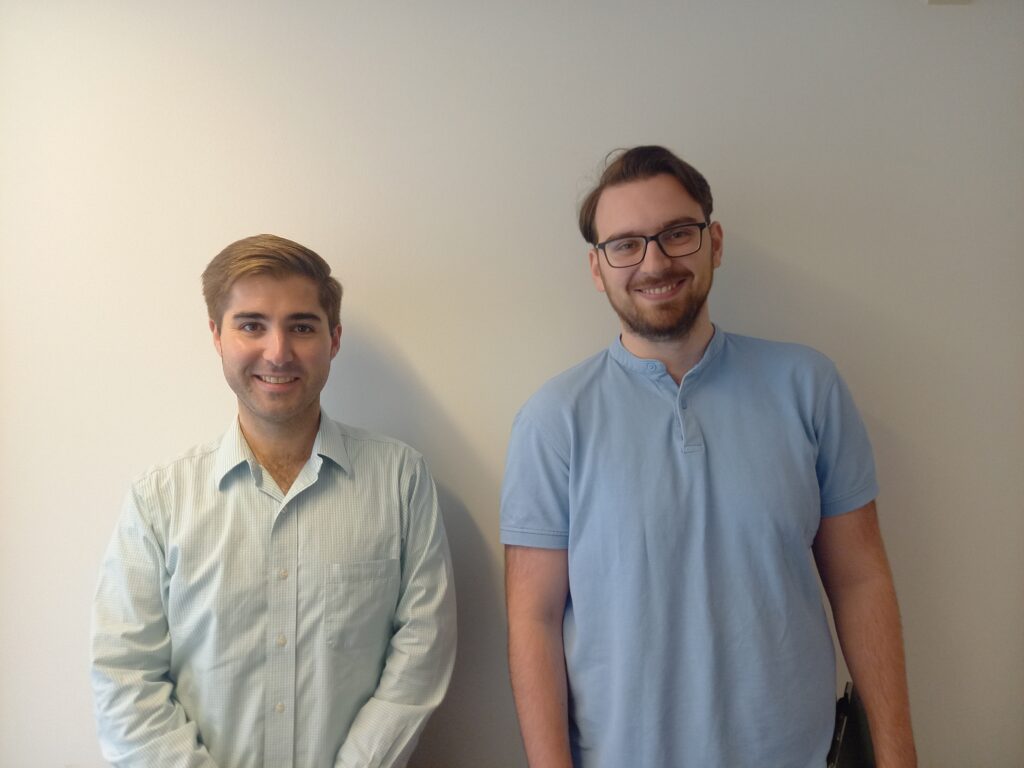
Electrons usually scatter from atomic nuclei in ways that we can predict extremely well. But lead has long been an exception. Normally, flipping the spin of the incoming electrons should produce a small but measurable change in the scattering, and for most nuclei this prediction agrees beautifully with experiment. Only lead refused to behave as expected, leaving a long-standing experimental inconsistency that no existing calculation could fully clarify.

In a new measurement performed at the Mainz Microtron MAMI, researchers of the CRC studied the same process at a different beam energy and scattering angle. This time, the effect is clearly not zero. Instead of resolving the earlier mystery, the result shows that the observable changes strongly with energy in a way not captured by current theoretical descriptions.

The work, now published in Physical Review Letters, deepens this long-standing puzzle and highlights the need for new theoretical approaches and further precision measurements—an area central to the CRC’s scientific program.

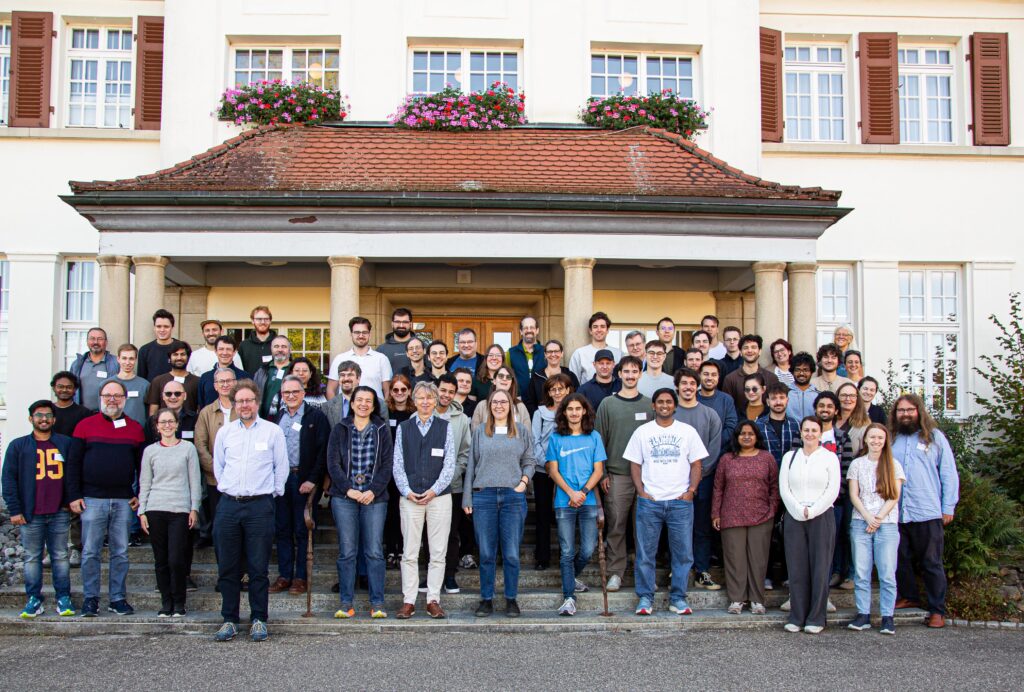
From September 22–26, we gathered at Schönblick in Schwäbisch Gmünd for the CRC Summer School 2025. About 70 participants from our CRC and associated projects came together for a week of inspiring lectures, ranging from effective field theory to parity violation and neutrino physics. Beyond the science, we took time to reflect on inclusion and participation, reinforcing our commitment to building a collaborative and welcoming community for all.